in Hamburg and surroundings, hybrid and remote
Nina Benfer · Freelancer · Social Media Ads & Websites
DE EN
LinkedIn

What I write on LinkedIn

Short notes from my working days — sorted by topic. Swipe through.

Artificial Intelligence (AI)

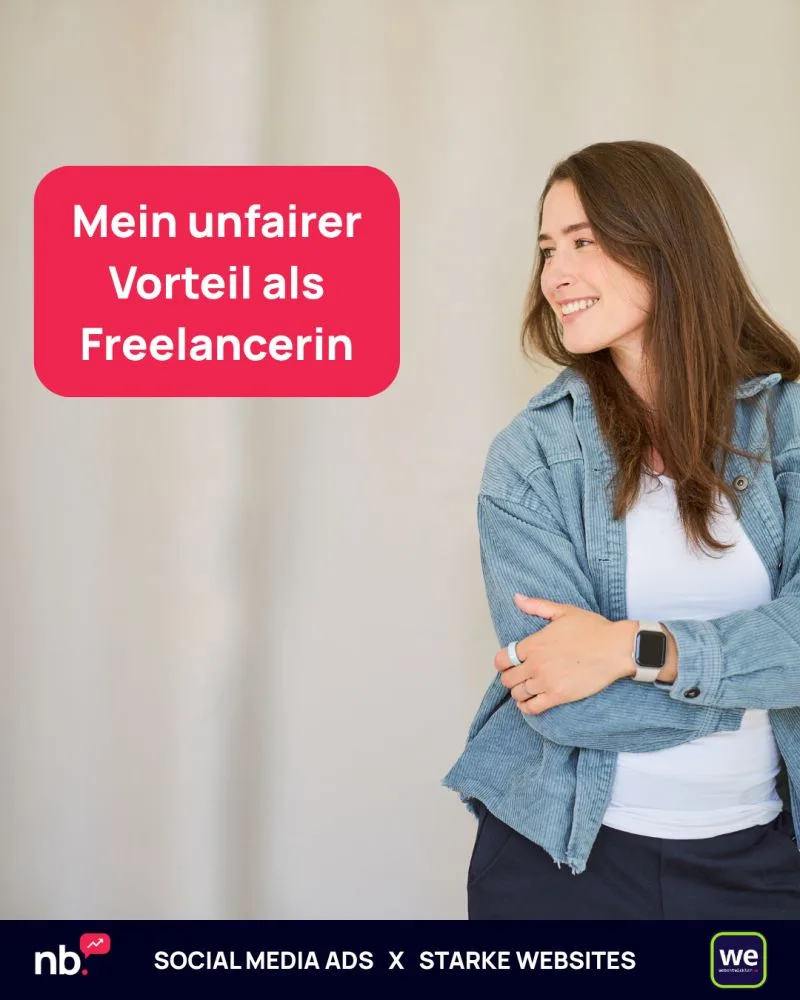
My curiosity has always been my biggest advantage. Since I started working with Claude, it's become my unfair one.
In three years of self-employment, I've learned more than in five years as an employee. And it's getting faster, not slower.
It's not coming from discipline, it's just there.
I always wanted to know everything, even things that weren't part of my job description. I constantly looked for new trainings, asked tons of questions, and tried to learn as much as possible from colleagues. As an employee, that probably drove one or two bosses a little crazy. (Ralf Gößling, right?)
And that's something you can't buy. You can buy tools, courses, certificates, seniority. But curiosity? No. It only emerges when learning is intrinsic and fun.
What changed with Claude isn't the drive. It's the pace.
The loop from "I don't understand this yet" to "I've got it" has become massively shorter. What used to be several evenings of research is now a sparring session: throw in a thesis, have it torn apart, ask for the counterargument, follow up, discuss, and form your own opinion.
I honestly can't imagine working without Claude anymore. Not because it does the thinking for me – but because I get significantly further in the same amount of time and learn an insane amount.
Could you still work without Claude?
… more
View on LinkedIn ↗ Originally posted in German.
My most productive sparring partner also works at 2 AM.
I can't hear these two camps anymore.
On one side: "AI works – I lean back." On the other: "It only makes mistakes and is inauthentic."
Both are convenient. And both get you zero millimeters further professionally.
I don't use Claude as a text machine. I use him as a sparring partner. I throw in a thesis and have it torn apart. I have him write the best counterargument to my own recommendation – the best one out there. I ask follow-up questions until it gets uncomfortable. And honestly, sometimes I don't want to hear the answer myself.
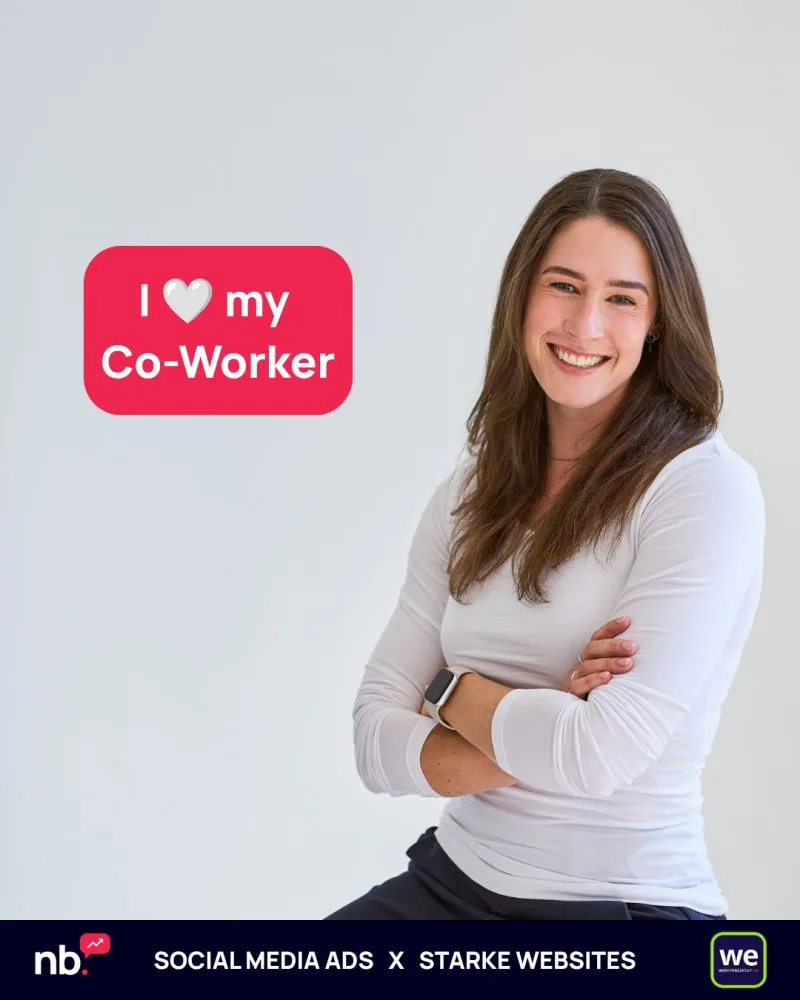
The difference from a colleague in the office: Claude answers my detailed tracking questions at 2 AM too. I'm a night owl. My co-worker works when I work.
And yet – or precisely because of that: I don't take any of it at face value. Everything gets questioned, double-checked, classified. In the end, it's my opinion there, not his.
Luckily, my last degree trained me above all to think critically (I vaguely remember the subject matter 😉).
This critical examination and holistic perspective are becoming no less valuable. They're becoming the actual skill.
Where do you stand: Sparring partner or text machine?

👋 I'm Nina, freelancer for Paid Social & powerful websites – and I love building both together, because when there's a good match, clicks become customers. I share practical knowledge and straight talk about Paid Social & everything that happens between ad and conversion.
… more
View on LinkedIn ↗ Originally posted in German.
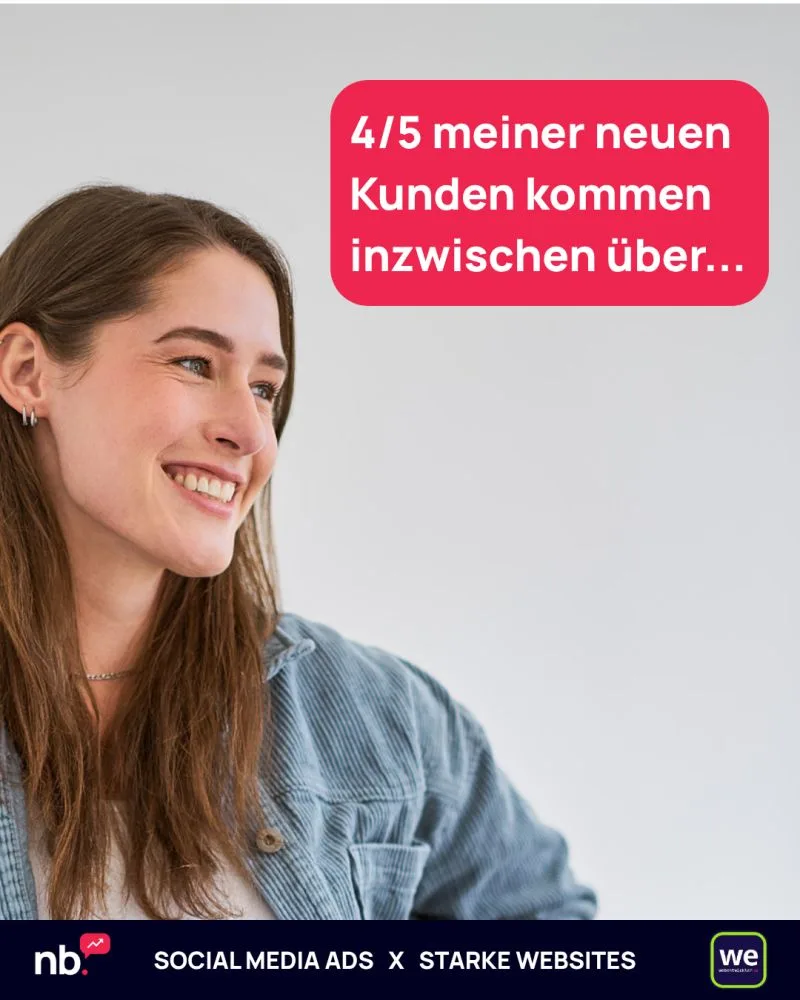
4 out of 5 of my new customers now come through ChatGPT.
Not because nothing else is coming in. But because the picture has completely shifted.
Just a year ago, the question was: "How do I rank on Google?" Today, someone sits in front of ChatGPT, types "recommend me a service provider for X" – and gets a handful of names. Not ten blue links, but a small pre-selection.
And if you don't show up there, you simply don't exist for that person.
SEO is no longer a buzzword, but the question that decides visibility: Does your website appear in the AI's answer – or not?
And this is far from a niche topic. Adobe Analytics measured it: In the 2025 Christmas season, traffic from AI tools to shop websites increased by 693% – year-over-year. Almost eight times over.
But the real kicker comes after that: These same AI visitors now convert 31% better than traffic from other sources. A year ago it was the opposite – AI traffic was the laggard. Now it's the strongest channel.
That's exactly what webentwickler.io specializes in. My brand, under which I build websites that do two things particularly well: they're fast and visible – on Google and in AI systems. So that not only people find you, but also the systems that people ask today.
My honest opinion: This is no longer a nice-to-have. This is essential.
If you build a website today that ignores AI, you're building past reality.
Do you yourself ask ChatGPT more often than Google these days when you're looking for something?

👋 I'm Nina, freelancer for Paid Social & strong websites – and I love building both together, because when there's a good match, clicks become customers.
I share practical knowledge and straight talk about Paid Social & everything that happens between ad and conversion.
… more
View on LinkedIn ↗ Originally posted in German.
Self-employment

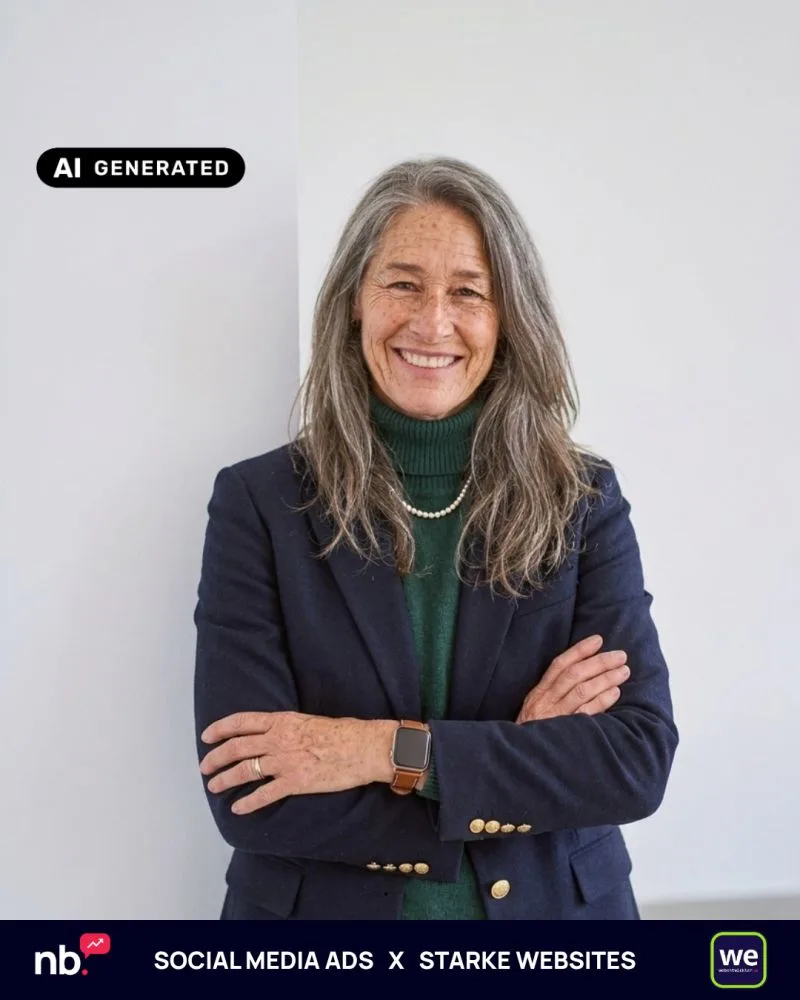
Do you recognize this cheeky lady? This is Future-Nina.
No one paid into her pension – and she thinks that's fantastic.
Providing for old age on your own terms means: Nobody tells you how much, how often, or what to invest in. Full control. Full risk.
No employer automatically deducting 9.3%. No point system running in the background while you're busy with campaigns.
The risk: Retirement savings become a leftover. First taxes, then setting aside for the tax office, then new equipment – old-age provision comes last.
For me it's the other way around: 15–20% of net income, every month, before anything else happens. Not a savings goal, but fixed costs. Like rent.
Via savings plan directly into ETFs, in a separate retirement depot.
Sounds tough at first. But it's the only thing that works for me with fluctuating income.
And honestly: I want to have this responsibility. Especially considering the state of the system that everyone else pays into. Let's hope this freedom stays with us freelancers.
Fixed percentage – or whatever's left at the end of the month?

👋 I'm Nina, freelancer for Paid Social & powerful websites – and I love building both together, because when there's a good match, clicks become customers.
I share practical knowledge and straight talk about freelancer life, Paid Social & everything that happens between ad and conversion.
… more
View on LinkedIn ↗ Originally posted in German.
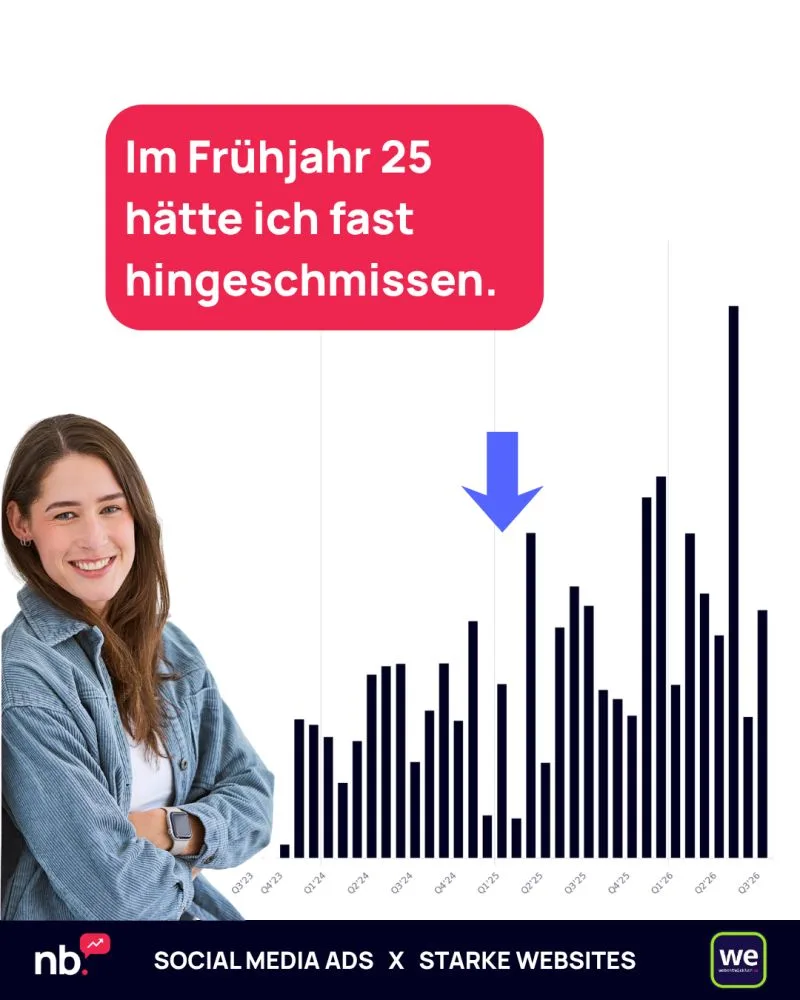
In spring '25, I almost quit.
Look at Q1 in the chart: two small bars after a year and a half of self-employment. In a moment like that, it feels huge.
Today I know: That wasn't failure, just normal fluctuation. A client pauses, a project gets pushed back, vacation in between, then you get sick – and as a freelancer you see it all immediately in your revenue line. It just comes with the territory.
Instead of jumping ship, I stuck with it. Ran ads in the meantime, invested in further education, and improved my presence piece by piece.
Hard work, curiosity, and continuous development pay off – not immediately, but definitely over time. Just look at what comes after Q1'25 in the chart.
What three years have taught me: Revenue as a freelancer is not a straight line – and it doesn't have to be. The valleys are just as much part of the journey as the spikes upward. Those who stick with it and keep developing come out stronger than they went in.
If your curve is down right now: stick with it. It's far from finished being drawn.
When did you have a turning point like that – and what helped you keep going anyway?

👋 I'm Nina, freelancer for Paid Social & strong websites – and I love building both together, because when there's a good match, clicks become customers.
I share practical knowledge and straight talk about Paid Social & everything that happens between ad and conversion.
… more
View on LinkedIn ↗ Originally posted in German.
Marketing

Better landing page or better campaign – which brings more?
Trick question. The answer is: both. If you only turn one lever, you're leaving half on the table.
I'll do the math for you. With real numbers.
Same spend. 100,000 impressions, same CPM.
Starting point:
CTR 1% → 1,000 clicks
CVR 2% → 20 sales
Only better ad:
CTR 1.5% → 1,500 clicks. CVR stays 2% → 30 sales. +50%.
Only better LP:
CVR 3% → from 1,000 clicks become 30 sales. Also +50%.
Both together:
1,500 clicks × 3% → 45 sales.
From 20 to 45. That's +125%. Not +100%.
At $100 AOV and $1,000 spend: ROAS from 2.0 to 4.5.
Why does it multiply? Because sales = impressions × CTR × CVR. A product, not a sum. Two levers at +50% each give 1.5 × 1.5 = 2.25.
Ads get the click. The LP gets the customer.
If you only optimize one, you're missing exactly the multiplier that makes the difference.
I optimize both – because ROAS is created across the entire funnel, not just in the Ads Manager.
Where do you have more room for improvement right now – before the click or after?

👋 I'm Nina, freelancer for Paid Social & strong websites – and I love building both together, because when there's a good match, clicks become customers.
I share practical knowledge and straight talk about Paid Social & everything that happens between ad and conversion.
… more
View on LinkedIn ↗ Originally posted in German.
powered by webentwickler.io